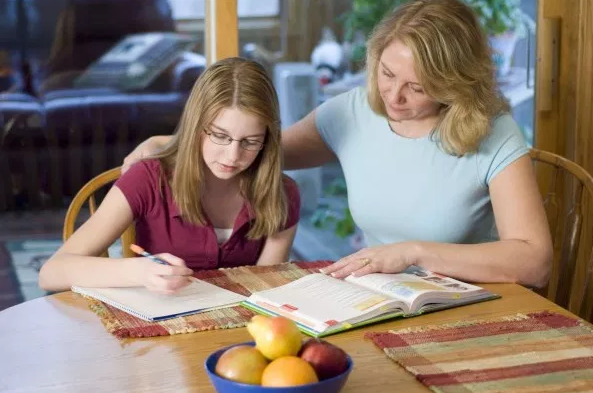
There are children who cannot adapt to school and their parents educate them at home: it is homeschooling.
It is not for an elite, nor for anti-systems, nor an extravagance that is becoming fashionable, nor for parents who are very “progressive” or very religious or who don’t care about anything… While thousands of children are starting the school year in school classrooms these days, others, the fewest, are doing it at home. This is what is known as “homeschooling”, a minority movement in Spain that is gaining momentum. The good academic results obtained by these children is the main argument used by families to defend a practice that is not regulated in Spain, as it is in Portugal, France, Belgium, Great Britain and the United States.
“At Harvard University they raffle off children who have been educated at home”, says Irene Briones – professor of Ecclesiastical Law and researcher at the Complutense University of Madrid – who organised the last congress on homeschooling held in Spain last year. A high grade point average is not so important,” she explains. It is more important that the student possesses skills and abilities. And homeschoolers have mental agility, great interpersonal skills, they are more independent and autonomous people, they are less afraid of life…”. Every year many American universities reserve places for homeschooled children. They want more mature and responsible young people.
There are parents who give up work to educate their children.
Deciding to have children educated at home is not a bed of roses. “Some families try it but have to send their children back to school,” says Briones. It is “a profound change of life,” says Juan Carlos Vila. There are parents who give up their profession and stop working to take charge of their children’s education”, with the consequent consequences, for example, on the family economy.
There is no one profile
In Spain, families who have decided to carry out this type of education do not have a defined profile, they are very heterogeneous. Very few do so for religious reasons. Ideological convictions weigh more heavily, the belief that school, as it is conceived, is not the most suitable system for teaching, among other reasons, because it does not cater for the individuality of the pupil, it does not motivate, nor does it awaken in them a curiosity for knowledge.
An additional effort must be made to socialise children
Juan Carlos Vidal, who has home-schooled his two children, acknowledges that these families have to make an extra effort to socialise their children, which they try to do by participating in many other activities. “We have to offer these children alternatives for socialisation”, as suggested by the pedagogue Jorge Casesmeiro, advisor to the Colegio Profesional de la Educación and director of psicopaidos.com: “That is, enrolling them in recreational, sporting, cultural and group activities… The family is the primary environment for socialisation. But school offers a broader context: it is a transitional space between the family and society; it exposes the child to a diversity of adult models that increase their psychosocial learning repertoire and allow them to contrast family values and shortcomings, and allows the child to establish links between their peers”….
Virtual School 365 www.vs365.cl is an online school with teachers of academic excellence, all our teachers have doctorates and postgraduate degrees in distance education… Visit us and be part of this community that is growing day by day…
4 of my 5 children have been studying Homeschooling for 5 years, 3 of them have already graduated from high school, I have only the last one left… all of them are happy and have been able to pursue their passion for sports and friends… in fact they have more friends now than when they studied in normal school…